A Rock Pool Is a Small World with a Changing Clock
See how tide, shade and shelter shape a rock pool, and learn to observe its wildlife without disturbing animals or putting yourself at risk.
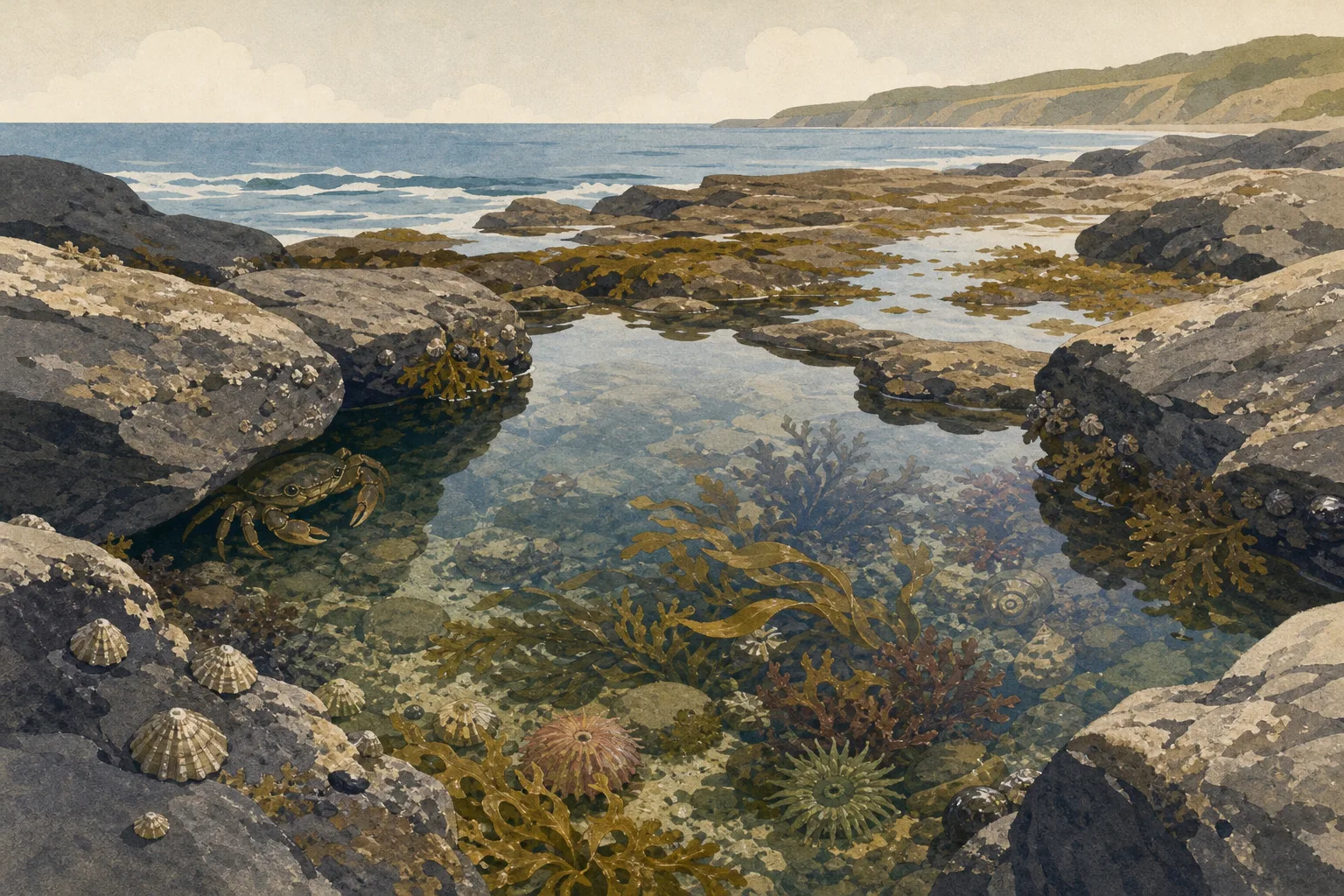
Why can a rock pool seem lively on one visit and still on the next? A rock pool changes with the tide: water depth, shade and wave exposure shift, while its animals shelter or remain still. You can learn a great deal by watching those changes without turning the habitat into a stage for handling its inhabitants.
Read the pool
Rock pools form where hollows in the shore hold seawater after the surrounding rock is exposed. Each pool has its own setting. A shallow hollow higher on the shore may receive seawater only when waves reach it; a deeper pool lower down may have more frequent contact with the sea. Crevices, overhangs and the pool’s opening affect how water moves through it.
These differences create small habitats close together. Seaweeds need light, while limpets, snails, crabs and anemones may shelter beneath ledges or among algae. A pool is not a miniature aquarium with stable conditions. It is like a bowl on a windowsill: what reaches it from outside can change what you see inside.
Before looking closely, pause at the edge. Notice the pool’s position on the shore, its depth, whether waves are reaching it, and where shade and seaweed cover lie. This first look helps explain what you see and where you can stand safely.
Look for hidden life
A pool that looks empty may simply have animals out of sight. Small creatures can cling beneath rock lips, settle among seaweed or blend into the rock. Some stay still as a person approaches.
- If animals are hard to spot from one angle, look from another stable spot; if the edge is unsafe, stay back instead of seeking a closer view.
- If the open water seems empty, pause and scan slowly from the edge towards the centre; if nothing appears, accept that some life may be concealed.
- If you see seaweed, barnacles, shells or anemones, observe them in place; if a closer view would require touching or shifting them, leave them undisturbed.
- If local guidance explicitly permits a torch, follow that guidance and keep the beam away from animals and sheltered crevices; if guidance is absent or unclear, do not use a torch at the pool. Ordinary daylight observation is the default.
- If a stone or frond covers a possible hiding place, leave it where it is; if you cannot see beneath it, move on rather than exposing what is there.
- If you notice a creature at the edge of visibility, watch without handling it; if it retreats, let it remain concealed.
Lifting seaweed or turning over a stone can expose animals to air, heat or predators. Leave cover in place. Accepting that you cannot see every inhabitant is part of respectful observation.
Notice changing conditions
A pool can look different between visits. As the tide falls, some water may remain in a shallow hollow while surrounding rock is exposed; sunlight, shade, rain and waves can also change the pool’s conditions. The precise effect depends on the pool and the weather, so a brief visit is not enough to diagnose what is happening within the water.
For a clearer comparison, observe the same pool from the same safe spot at different stages of the tide. Note whether it is shaded, whether waves are reaching it and which surfaces are exposed. Record visible details rather than trying to infer a precise temperature or water condition by touch.
Say you return to a familiar hollow on a bright, calm afternoon and find less water than you remember, with more rock exposed. You also spot a crab beneath a shaded edge. Stay on secure ground and watch from above. The changed view may reflect the pool’s conditions at that moment, but it is no reason to move the crab or rearrange its shelter.
Cloudy water signs
Cloudiness may follow waves stirring sand, rain carrying material down the shore or people disturbing the bottom. Natural debris can also make water look cloudy. Appearance alone cannot identify every cause, so do not treat a cloudy pool as either clean or polluted on that basis.
Wait for the water to settle and look for a possible source from a distance. Do not stir sediment to improve visibility or collect water and animals for inspection. If you see an unusual spill, smell a strong chemical odour or notice dead animals across the shore, leave the area and follow local reporting advice rather than approaching the material.
Keep a safe position
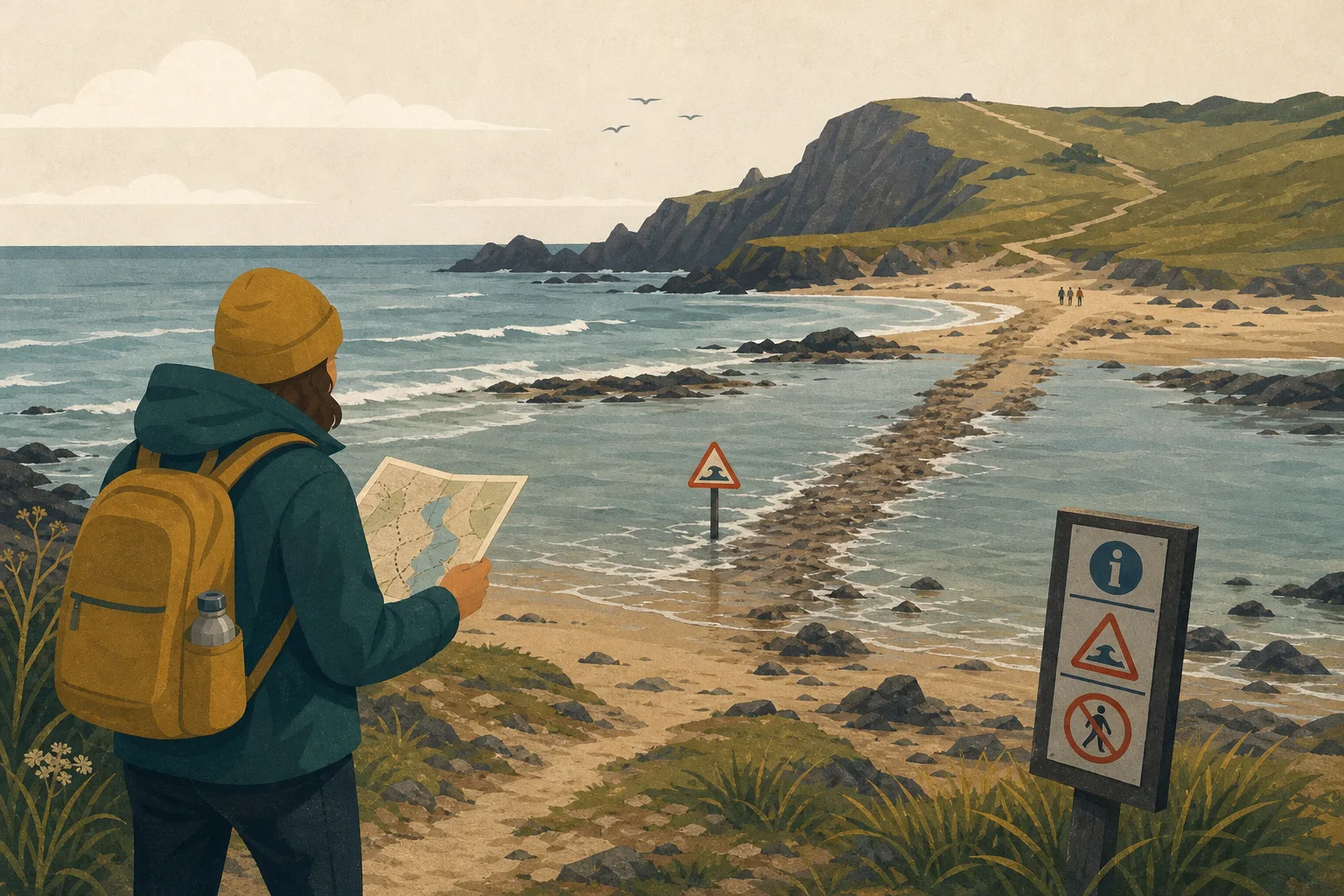
Wet rock, algae and loose stones can be slippery, and a pool’s edge may be uneven. Choose a place where you can stand securely without stepping on seaweed-covered rock or reaching across a drop. Wear footwear with a firm grip, keep your hands free where possible and check local tide information before lingering.
Do not climb onto isolated rocks as the water returns. If the route back looks less safe than it did on arrival, leave early by the way you came. Children should stay close to an adult; if local conditions are uncertain, follow posted signs or ask a local authority for guidance.
Rock pool questions?
When is a good time to look?
A receding tide can reveal more of the shore, but safe access depends on local conditions. Check local tide information and leave enough time to return before water cuts off your route.
Can I pick up a crab or shell?
Watch animals where they are, since handling can injure them or expose them to air and heat. Leave shells in place if they are attached, occupied or part of the pool’s shelter.
Why do some pools have seaweed?
Seaweed grows where light, water movement and suitable surfaces allow it to attach. Its cover can provide shade and shelter, so do not pull it away to see what lies beneath.
Should I take a rock home?
No. Rocks can provide surfaces and hiding places for shore life, and moving them can disturb the habitat. Photograph the pool from a stable spot instead, without stepping into it.
Leave the habitat intact
Good rock pool observation begins with looking before touching. Keep stones and seaweed in place, avoid crowding animals, take rubbish away and stay on secure ground. If you photograph the pool, frame it from the shore rather than moving its contents for a clearer view. Do not use a torch unless local guidance explicitly permits it; if permission is unclear, rely on daylight and observe from a stable position.
Each visit captures one moment in a habitat shaped by the tide. Notice which parts of the pool are exposed, where water is reaching the shore and what remains sheltered. Those details make rock pool changes easier to understand while leaving its inhabitants and their cover undisturbed.